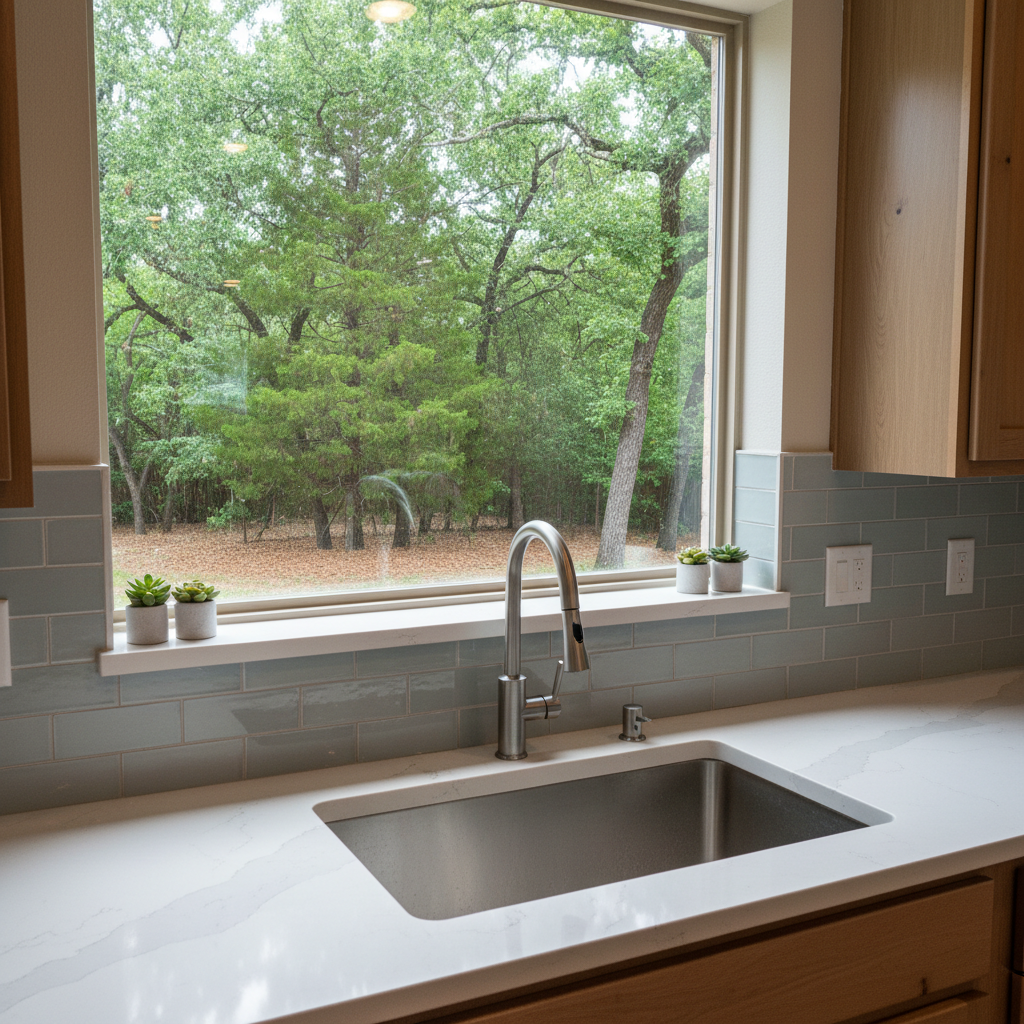
Are you getting ready to upgrade your kitchen counters? Here is what you need to know about timing your project right here in Central Texas. Between the scorching summer heat and the shifting humidity we get around Cedar Park, our local climate plays a bigger role in home remodeling than most people realize.
Classic Kitchen Co sees all kinds of weather impact job sites. Let us look at how the seasons affect your stone installation and what you can do to protect your investment for the long haul.
How Texas Weather Affects Countertop Installation
Granite, quartz, and marble are tough materials, but they are sensitive during the installation phase. Extreme temperature swings can cause adhesives and epoxy seams to cure differently. When the mercury hits triple digits in July and August, outdoor storage of stone slabs or transport in unconditioned vehicles can make the material very hot to the touch. Classic Kitchen Co always lets slabs acclimate inside your home before cutting or setting them. Otherwise, thermal expansion can throw off precision measurements by a hair, which ruins a tight seam.
Humidity is another factor. High moisture levels in spring can sometimes slow down the curing time of silicone caulking around your undermount sink and backsplash lines. Classic Kitchen Co plans for these small variables so your project does not hit snags.
Timing Your Remodel Around the Cedar Park Seasons
Most homeowners want to wrap up their kitchen projects before the winter holidays or right as spring kicks off. Spring and fall offer the most comfortable working conditions, but a skilled contractor can install countertops year-round as long as indoor climate control is running.
If you are planning a major overhaul, try scheduling the messy fabrication and template stages during our milder months. Summer remodels are completely fine too, as long as your home air conditioning system is running to keep indoor temperatures stable while the epoxy sets.
Protecting Your Investment Year-Round
Once those new counters are in, keeping them looking sharp depends on seasonal maintenance. Central Texas tap water can be hard on natural stone, leaving mineral deposits if water pools around the faucet. Wipe down your surfaces regularly with a soft cloth.
If you chose granite or quartzite, fall is a great reminder to test the seal. Pour a few drops of water on the surface and wait fifteen minutes. If it darkens, it is time to reseal. Engineered quartz does not need sealing, but it cannot handle direct heat from cast-iron pans straight off the stove; always use a trivet.
Taking care of the details ensures your kitchen stays the centerpiece of your home through every Texas season.